Automated phase-type distribution fitting via expectation maximization
Journal of Reliable Intelligent Environments
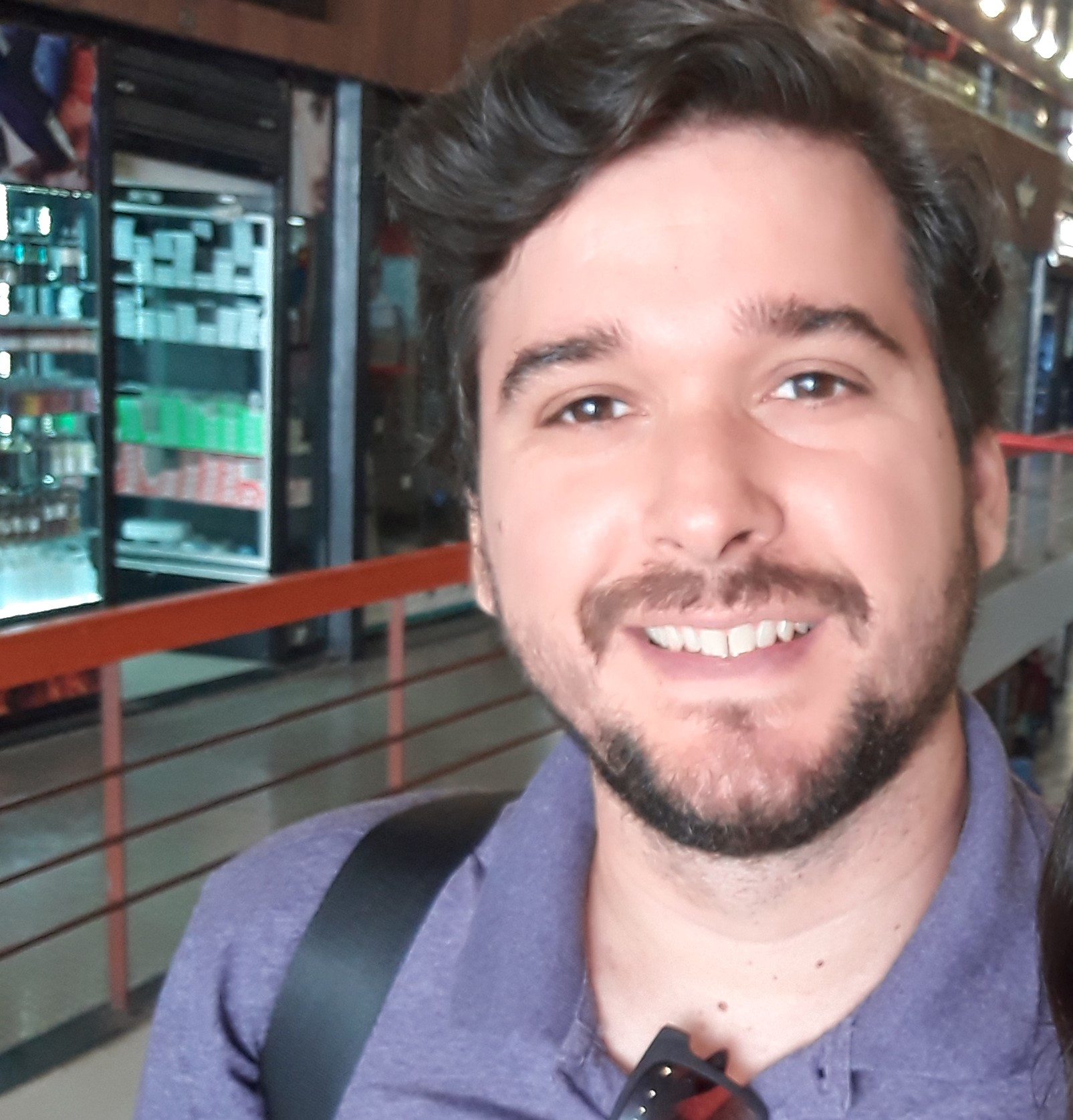
Senior Data Architect & Professor — I design data pipelines and agentic AI systems, and hold a PhD in Computer Science researching how phase-type distributions model system reliability.
Ingestion and integration pipelines across structured and unstructured sources, and data-driven system design.
LLM-based agents and services — including an MCP server in FastAPI for orchestrating intelligent workflows.
Modeling system failure times with phase-type distributions, fitted via Expectation-Maximization.
Data Engineering, Statistical Inference and Data Analysis — teaching since 2011, from calculus to Big Data.
I hold a degree in Mathematics Education from UFRPE (2008) and a Master's in Mathematics (2011), with research in algebraic geometry. Around 2018 my interests shifted toward computational mathematics, and in 2023 I completed a technologist degree in Database Management at SENAC — the step that moved me fully into data.
In 2026 I completed my PhD in Computer Science at CIn-UFPE, researching statistical models for system failure times using phase-type distributions, estimated with Expectation-Maximization algorithms. Today I work as a Senior Data Architect at TJPE (via FSBR), building ingestion pipelines and agentic AI solutions, and I teach Data Engineering, Statistical Inference and Data Analysis at Cesar School.
Ingestion and integration pipelines for structured and unstructured data, and data-driven architecture design. Building agentic AI solutions, including an MCP service in FastAPI to orchestrate intelligent workflows and automate processing.
Teaching Data Engineering, Statistical Inference and Data Analysis.
Led "Hub do Comércio," a digital platform for Fecomércio-PE built on a data lakehouse architecture. Consolidated data from IBGE, Banco Central, Receita Federal and primary sources into interactive dashboards, automated reports and financial management tools.
Mentored students in Python and Java through practical projects — system maintenance, testing, code review and course material development.
End-user technical support; diagnosed hardware, software, network and OS issues, and documented resolutions.
Taught foundational engineering courses — Calculus, Linear Algebra, Analytic Geometry, Probability & Statistics, Differential Equations, Numerical Methods — as well as Big Data, Data Science, Relational Databases and Project Management.
Research in reliability engineering, modeling system reliability with phase-type distributions. Applied Expectation-Maximization (EM) algorithms to estimate distribution parameters and contributed to their implementation in the research group's software.
Database management fundamentals — SQL and NoSQL, data modeling, querying and data manipulation.
Research in algebraic geometry; dissertation on static curves in the complex projective plane.
Research on the local-global principle via the Hasse–Minkowski theorem, relating rational solutions of quadratic forms to their local completions.
Peer-reviewed work on reliability modeling, fog computing and applied machine learning.
Journal of Reliable Intelligent Environments
Workshop on Resilience Engineering in Computing Systems (RECS), SBC
Knowledge-Based Systems
Computers & Security
A sample from github.com/MatmJr — data pipelines, agentic AI and teaching materials.
An end-to-end PySpark pipeline, containerized with Docker Compose, for processing airport data at scale.
A natural-language-to-SQL chatbot powered by GPT-4o-mini, letting users query a delinquency and demographic database through a Streamlit interface.
An ETL pipeline that extracts Brazilian Central Bank data, transforms it with Pandas, loads it into SQLite/CSV, and visualizes it through a Dash + Plotly dashboard.
A Flask web app that predicts Titanic passenger survival probability using a Random Forest model.
Lecture slides, notebooks and code used to teach Big Data — the most-starred repository on my GitHub.
Open to conversations about data architecture, agentic AI, reliability research or teaching.